 You’ve found the perfect design and the right artist. There’s just one thing holding you back: the pain. If the thought of the needle is making you reconsider that dream tattoo, you’re not alone.
The fear of how much it will hurt is one of the most common reasons people hesitate. If you’re considering using lidocaine for tattoo pain relief, you might wonder: can you use lidocaine before a tattoo, and does lidocaine work for tattoos?
Lidocaine–A Game Changer
For many, the secret to sitting through a long session isn’t just grit—it’s a numbing cream. These creams, typically using lidocaine, can be a game-changer for painful spots. However, using them correctly is the only way to ensure it doesn’t negatively impact your health or your tattoo. This guide explains how to use lidocaine for tattoos and when lidocaine for tattoo numbing makes sense.
So, is it safe? Can you use lidocaine for tattoos? When done right, absolutely. This guide provides the complete plan for a more comfortable experience, covering how to apply the cream safely, what to look for, and—most importantly—how to talk about it with your artist.
How Lidocaine Works to Block Tattoo Pain
Lidocaine is a topical anesthetic, a numbing agent that works on the surface of your skin. It acts as a temporary roadblock for your nerves, sinking in to block them from sending pain signals to your brain. This effectively puts the sharp sting of the needle on hold for a few hours.
So what does a tattoo feel like with numbing cream? It doesn’t erase all sensation. Instead of a sharp sting, you’ll likely feel a dull pressure or the machine’s buzzing vibration. Because this effect is temporary and localized, it’s important to weigh the trade-offs before deciding if it’s right for you.
The Pros and Cons of Numbing Cream for Tattoos
 Using a numbing cream involves weighing its comfort against potential trade-offs. To help you decide, here’s a straightforward breakdown. In short, here are the pros and cons of numbing cream for tattoos.
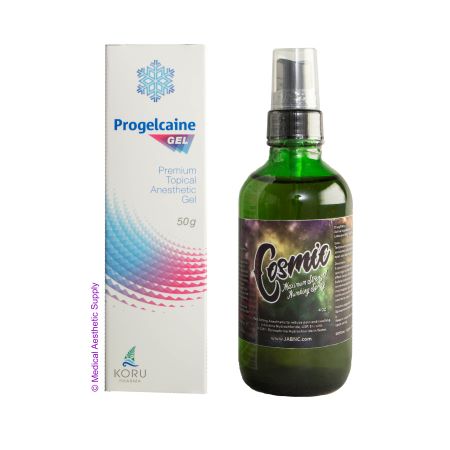
Johnny Crash Ultimate Combo
The Johnny Crash Ultimate Combo, formerly the Maxi-Lidocaine COMBO, is a 10% lidocaine combo that includes a topical lidocaine gel (9.6%) and a 5% lidocaine numbing spray.
Highly recommended by San Diego tattoo artist Johnny Crash Tattoo (Johnny Farnsworth), who swears by it. See the link for his testimonial. Johnny Crash Tattoo (Johnny Farnsworth) Instagram
This lidocaine 10 percent combo is effective for tattooing, microneedling, permanent makeup (PMU), PRP, plasma fibroblast skin tightening, microblading, or similar needling procedures.
| Pros: The Upside of Numbing | Cons: The Potential Downsides | | :— | :— | | Sit for Longer: Ideal for large pieces or multi-hour sessions. | Altered Skin Texture: Can make skin feel spongy or “rubbery.” | | Reduces Pain Anxiety: Eases the pre-tattoo jitters. | The “Pain Rebound”: The numbing can wear off mid-session. | | Makes Sensitive Spots Bearable: A huge help for ribs, feet, etc. | Skin Irritation: A small risk of an allergic reaction or rash. |
The biggest concerns revolve around how the cream affects the process. Some products alter the skin’s texture, making it harder for an artist to stretch it properly and leading to patchy results. People often ask: Does numbing cream mess up tattoos? Does numbing cream affect a tattoo? Does numbing cream affect tattoo healing? Furthermore, there’s the pain rebound effect. If the cream wears off unexpectedly, the sudden onset of pain can feel far more intense than the gradual discomfort you’d otherwise acclimate to. Fortunately, most of these risks can be minimized by using the cream correctly.
The 5-Step Guide: How to Apply Numbing Cream for Maximum Effect
To ensure your numbing cream works, proper timing and technique are crucial. A thin layer applied minutes before your appointment won’t be enough. If you’re wondering how to numb the skin before a tattoo session, the key is a process called occlusion, which begins 60–90 minutes beforehand. By applying a thick layer and covering it with plastic wrap, you trap heat and moisture. This opens your pores, allowing the lidocaine to penetrate deeper to the nerve endings rather than evaporate from the surface.
Follow these steps for the best results:
1. Patch Test (24 hours prior): Apply a small amount to your skin (like your inner elbow) to check for irritation.
2. Clean & Shave: Right before applying, wash the area with soap and water. Shave it if necessary.
3. Apply a Thick Layer: Don’t be shy! Slather on a thick, frosting-like layer. Do not rub it in.
4. Wrap securely: Cover the entire area with plastic wrap. Make sure it’s snug but not cutting off circulation.
5. Wait 60-90 Minutes: Leave the wrap on for at least an hour. Your artist will wipe it clean right before they start working.
Note: A lidocaine patch before a tattoo appointment may not provide the same occlusion or coverage as plastic wrap, so discuss any patch use with your artist to avoid uneven results.
Can Numbing Cream Ruin a Tattoo? The Risks You Must Know
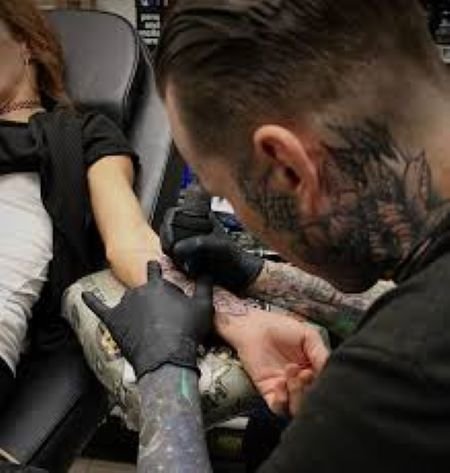 (left, Johnny Crash Tattoo)
You might wonder, can numbing cream mess up a tattoo? While numbing cream can be a lifesaver, using it incorrectly poses two main risks: one to your new ink and one to your health. The biggest risk to your art is that certain formulas can make the skin temporarily puffy or sponge-like.
This change in texture makes it much harder for your artist to stretch the skin evenly, which is critical for clean lines and solid color, potentially resulting in a patchy or faded tattoo.
Beyond the art, there’s a crucial safety rule. Never apply these creams to broken skin—like a fresh sunburn, a cut, or during a touch-up on a partially healed tattoo. Doing so allows the lidocaine to enter your bloodstream too quickly. This is known as systemic absorption, and while rare, it can cause serious side effects like dizziness or a rapid heartbeat. If you’re asking, can I put lidocaine on a new tattoo? Can you put lidocaine on a fresh tattoo? Can you put numbing cream on a fresh tattoo? The answer is no; wait until your artist or healthcare professional confirms the area is fully healed.
Finally, the product you choose matters. While most over-the-counter creams are capped at 5% lidocaine, stronger, unregulated products are often sold online and carry a higher risk for both skin irritation and systemic side effects. This is why some people ask why numbing cream is bad for tattoos—but the reality is that problems usually stem from improper products, poor technique, or lack of artist approval rather than from careful, informed use.
Why You Must Talk to Your Tattoo Artist Before Using Numbing Cream
You wouldn’t bring your own ingredients to a chef, and the same respect applies here. Many artists have a specific policy on numbing agents—some disallow them because they alter skin texture, while others may recommend a brand they trust. This rule isn’t personal; it exists to protect the quality of your final tattoo.
Arriving pre-numbed without discussion is a major breach of etiquette that could lead to your artist canceling the session. You might forfeit your deposit and go home without your tattoo, as they can’t guarantee work on skin with an altered texture.
An open conversation is the key to successfully using lidocaine. It allows your artist to offer their best advice and ensures a smoother experience for everyone involved.
Your Pre-Tattoo Numbing Checklist
Before your appointment, use this final checklist to ensure a safe and comfortable experience.
DO:
• Talk to your artist first—this is the most crucial step.
• Perform a patch test 24 hours prior to checking for a reaction.
• Apply a thick, wrapped layer 60-90 minutes before your session.
• Ensure the cream is wiped off completely before the tattoo begins.
DON’T:
• Never apply numbing cream to broken, irritated, or sunburnt skin.
• Do not use more than the directed amount or cover a massive area of your body.
• Never apply it to a healing tattoo, as it can trap bacteria and damage the ink.
Remember, this isn’t just about blocking pain; it’s about using a tool correctly so you and your artist can focus on what truly matters: creating a beautiful piece of art that you’ll love for a lifetime.
Q&A
Question: Is lidocaine safe to use for tattoo pain relief? Short answer: Yes—when used correctly and with your artist’s approval. Over-the-counter creams (typically up to 5% lidocaine) are generally safe if you patch-test 24 hours in advance, avoid applying them to broken or irritated skin, don’t exceed the directed amount or cover very large areas, and make sure the cream is fully wiped off before the tattoo starts. Misuse can affect the tattoo (spongy skin that’s harder to work on) and your health (rare systemic absorption with symptoms like dizziness or rapid heartbeat). Discussing it with your artist is essential to protect both your skin and the final result.
Question: What will a tattoo feel like with numbing cream, and how does lidocaine work? Short answer: Lidocaine is a topical anesthetic that blocks nerve signals near the skin’s surface. With proper use, sharp stinging is replaced by dull pressure or the machine’s vibration—you’ll still feel something, just less sharply. The effect is localized and temporary, so plan your timing and expectations accordingly.
Question: What are the main pros and cons of using a numbing cream? Short answer: Pros: It can help you sit longer for big pieces, reduce anxiety about pain, and make sensitive areas (like ribs or feet) more manageable. Cons: Some formulas can temporarily change skin texture (spongy/rubbery), there’s a “pain rebound” if it wears off mid-session, and there’s a small risk of irritation or an allergic reaction. Most downsides are minimized by correct product choice, timing, and technique.
Question: How do I apply numbing cream so it actually works? Short answer: Use occlusion. Do a 24-hour patch test. Right before application, clean and shave the area. Apply a thick, frosting-like layer without rubbing it in, then cover snugly with plastic wrap. Leave it on 60–90 minutes so heat and moisture help the lidocaine penetrate, and have your artist wipe it clean right before starting. A quick, thin application minutes before the appointment won’t be effective.
Question: Why should I talk to my tattoo artist before using numbing cream? Short answer: Artists often have firm policies because numbing can change skin texture and affect linework and color packing. Arriving pre-numbed without approval is poor etiquette and can lead to a canceled session and a forfeited deposit. A heads-up lets your artist advise on whether to use it, recommend trusted products, and plan the session for a smoother experience.